Annual Report to HHMI, Undergraduate Programs division
Report Period: May 1, 1998 through April 30, 1999
Narrative report on Student Research and Broadening Access to Science:
Summer research fellowships supported by this grant were awarded to two Kenyon students:
Scheroi Taylor, class of 2001, worked with Assistant Professor of Chemistry Rosemary
Marusak on a project in solution properties of ruthenium ethylene diaamine tetraacetate
(RuEDTA, commonly called acetic acid) and ruthenium ethylene diaamine tetraacetate bisamide
(RuEDTA-ba). Scheroi has since declared her intention to major in chemistry at Kenyon and
was awarded a Kenyon Summer Science Scholarship to pursue further research with Prof.
Marusak.
Jed Henry, class of 2000, worked with Associate Professor of Biology David Marcey. In
his project, he studied the effects of nitric oxide on drosophila kc cells. As Jed describes his
results, "We know that the hormone, ecdysone, causes these cells to slow in mitosis and begin
inversion. Ecdysone is clearly seen in the development of the fruit fly. That is, certain cells of
the fruit fly "know" when and what to divide into because ecdysone directs their development.
We found that nitric oxide, at precise concentrations, can cause the same effects on cells that
ecdysone did. Therefore, we hypothesized that nitric oxide may be the signal molecule that
ecdysone mediates in cell division."
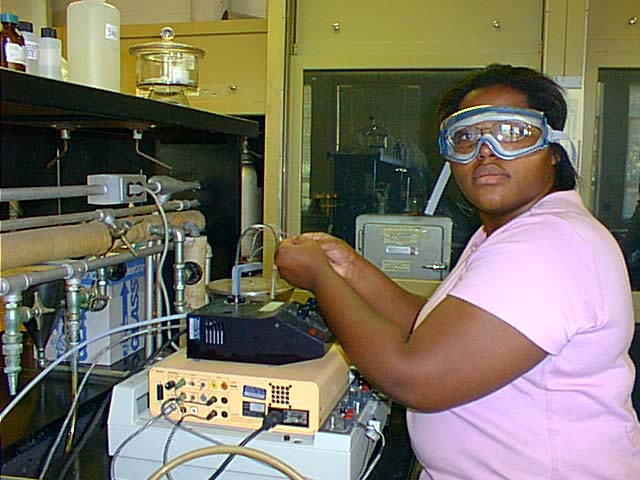 Photo 1.1: Scheroi Taylor, class of 2001,
prepares apparatus for electrochemical studies on
a novel ruthenium complex in the lab of
Professor Rosemary Marusak. The
ruthenium ICRF (Imperial Cancer
Research Fund) ligand is an important
cardioprotectant used in doxorubicin
chemotherapy.
Photo 1.1: Scheroi Taylor, class of 2001,
prepares apparatus for electrochemical studies on
a novel ruthenium complex in the lab of
Professor Rosemary Marusak. The
ruthenium ICRF (Imperial Cancer
Research Fund) ligand is an important
cardioprotectant used in doxorubicin
chemotherapy.
In addition to these summer research positions, a pre-first-year bridging program was
funded by this grant. Thirteen members of the class of 2002, shown below with Kenyon
Admissions officers Dolph Clinton and Robert King, spent two weeks at Kenyon in the summer
prior to their matriculation at the College. The group, shown in the photo below, was a
multi-racial group including many first-generation college students. The program was conceived
as a way to boost the skills and confidence of the students by engaging them in college-level
work in a small group setting, without the pressure of grades, extracurriculars, and a full
academic schedule to contend with. They were also given an introduction to the community of
the college and the surrounding area by Clinton and King.
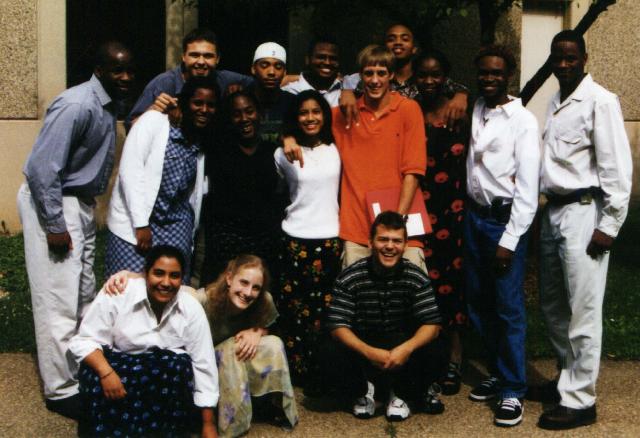
Photo 1.2: Front row: Amanda Jemmott, Shana West, and Eduardo Rivera. Middle row: Dolph
Clinton (Admissions), Meheret Birru, Elkinsette Clinton, Seena Mathew, Brandon Lute, Rhoda
Raji, Densil Porteous, and Robert King (Admissions); Back row: Adam Sapp, Richard
Dickinson, James Greenwood, and Ivan Isreal.
During the two weeks, the students worked with Associate Professor of Physics Paula
Turner and Instructor of Chemistry (and Director of Outreach Programs for this grant) Dudley
Thomas on classroom and laboratory exercises designed to increase their preparation for work in
introductory science courses at Kenyon. The students learned computing and library skills in
researching and preparing audio-visual presentations on medicinal herbs. They practiced
laboratory techniques in performing three experiments (a chemical synthesis of aspirin, a
kinematic exploration of acceleration and deceleration in a moving vehicle, and a spectroscopic
investigation of the nuclear decay properties of radioactive isotopes) which are similar to (or are
contained in) introductory-level science lab courses at Kenyon. They practiced scientific
analysis, writing, and editing skills in preparing a formal typed report on one of the experiments
of their choice. They also read and discussed with the instructors a book (Science Matters, by
Hazen and Trefil) aimed at improving knowledge of science at the entry college level.
These assignments, as well as the chance to meet other incoming students from similar
backgrounds, helped prepare these students to meet the academic and social challenges of
Kenyon College. The students remained in close contact with one another, and also maintained
relationships with the instructors, throughout their freshman year, and a number have expressed
their feeling that the workshop offered them a unique and valuable opportunity to acclimate
themselves to Kenyon and prepare for their first year here.