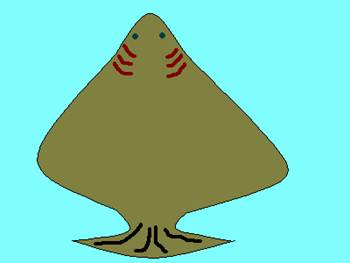
Albens
Due to the spontaneous
tidal effects, Albens have evolved flat bodies. This allows them to easily
move through shallow water, and also to lie in the shallow tide pools they
can often become stranded in. The large “flippers” that make up each side
of the Albens can also be used to cross narrow strips of land. The mouth
is located on the bottom of the creature for easy feeding from the flat
and rocky seabed.
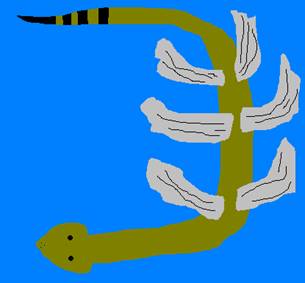
Nasat
Nasats are a snake approximately
four or five feet long. Along the Nasat’s back are three sets of wing-like
flippers. These delicate wings can be neatly folded along the creature’s
back while it moves across land. Underwater, it uses them for steering
and propulsion in addition to the length of its body. Nasats eat mostly
small fish and crustaceans, but have been known to gather with other Nasats
and attack larger animals such as the Albens.
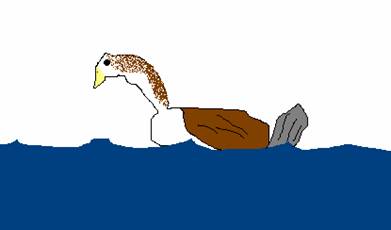
Delopus
Delopi are large birds,
approximately seven feet in wingspan. They are white underneath, and brown
on top. This allows them to blend in with the sky during flight and with
the land while grounded. They have light bodies, such that they can glide
for long periods of time if waters engulf too much of the land. They can
also float on the water for a long time. Delopi could spend nearly their
entire life on the water if not for breeding. Delopi give birth to live
young, as eggs would be too much at risk when the tides shifted.
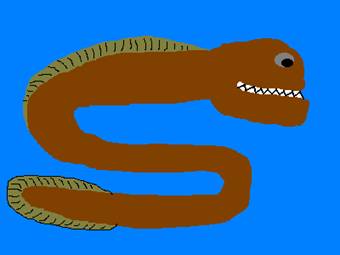
Vorus-wyrms
Vorus-wyrms are large,
elongated fish, similar to eels. Vorus-wyrms measure up to twelve feet
in length. They lie waiting in the depths for the receding tide to send
fish running back into the deeper sea. They attacks these schools, sucking
in dozens of smaller fish through its huge jaws. Though a fearsome predator
for small creatures, the Vorus-wyrm’s jaw muscles are weak and its teeth
are dull. Despite its size, it is no match for some of the larger sea creatures.