Press Briefing
Supplementary Document
Energy Conservation in Larsatva Mine Community
Report by Lirs Tirtully, Apprentice Planetary Custodian
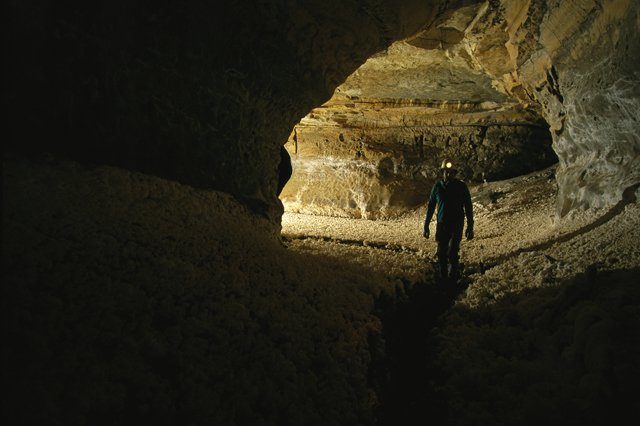
The gypsum mine community located in tunnels beneath the Larsatvan tundra is a fascinating example of human dedication and adaptation to Epicinean nature. The miners have dedicated themselves to collecting gypsum for the cultivation of our sacred yeast-based alcoholic drink Yalmoch. Mine runners ship their collected gypsum weekly to brewerys all across Epicinea, where the brewers use it to enrich the mineral content in their brewing water to give Yalmoch rich and beneficial properties (as well as incomparable flavor). The Larsatvan mines have the highest recorded gypsum content on Epicinea, but because the freezing aboveground conditions are so harsh, miners have committed to living belowground in tunnels encircling the main mine areas in communities that are as rich as the Yalmoch they help to create! The miners welcomed me immediately, showing me around their intricate tunnels and allowing me to participate in their monthly light festival that helps brighten an otherwise sunless abode. The festival includes stringing an individual light bulb for every mine inhabitant throughout the tunnels, and then lighting them up quickly one by one so that all inhabitants experience their own personal moments of recognition. This is a truly fascinating community.
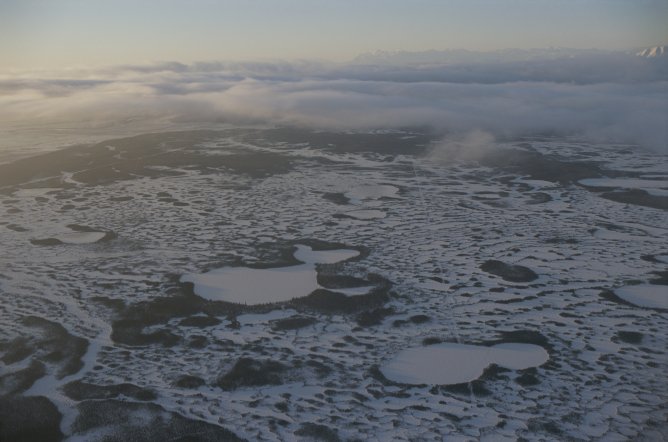
Above the mines is virtually unliveable, with harsh freezing winds and uneven terrain.
Upon observing this festival, however, it occurred to me that such a massive construction of light bulbs must require a huge amount of energy. I asked one of the festival coordinators how they obtained this energy and the coordinator explained that for all energy collection, they use photovoltaic solar panels that convert 14% of absorbed solar power into usable energy. I concluded that the festival alone must call for a massive area of solar panels, and thought it a useful endeavor to find out just how much, so as to gain a better understanding of the means necessary to provide for a single evening of sacred activity.
I remembered from previous research that Epicinea has 0.7 kW of solar energy available per square meter. There are 3,000 mine occupants and the festival uses all 40w lightbulbs. Thus I first calculated the kW of energy per m^2 that could be converted into usable energy by the solar panels:
0.14 * [(0.7kW)/m^2] = 0.098 kW/m^2 = 98 w/m^2
I then calculated the total watts used by all the festival lightbulbs (one for every inhabitant):
40w * 3,000 = 120,000 w needed in total
Lastly, I used this information to calculate the total number of square meters worth of solar panels necessary:
120,000w * (m^2/98w) = 1224.49 m^2 of solar panels necessary for festival.
I found this to be a large amount of solar panels, and it certainly helped me to gain perspective on the relationship between our own customs as an Epicinean people and the resources of our very planet. Without meters and meters of materials capable of converting the energy of our own sun into energy to fuel our light bulbs, we would not have the simple privilege of a single night every month of recognition and appreciation of our fellow neighbors and companions all involved in the same effort of providing a sacred drink to Epicineans miles and miles away from ourselves. Such a revelation only fuelled me further on to explore our intricate connections our surrounding atmosphere.
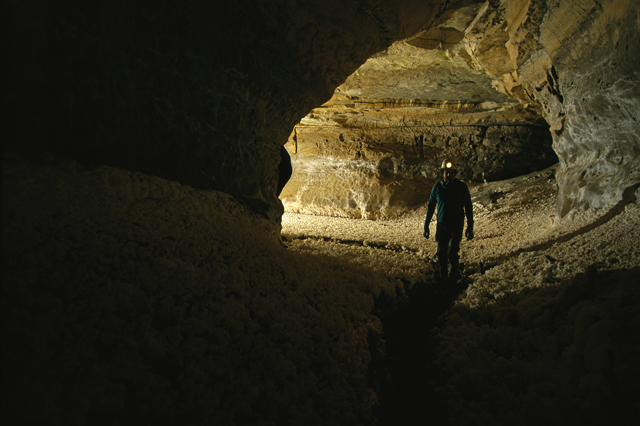
Natural light leaks into the Gypsum mines at the entrance, but several meters in, the only light comes from Epicinean lightbulbs powered by solar panels aboveground.