| MBIO
Major Biology Dept Kenyon College |
|
XXXXXXXXXXXXXXXXXXXXXXXXX |
| MBIO
Major Biology Dept Kenyon College |
|
XXXXXXXXXXXXXXXXXXXXXXXXX |
BIOL 263: Molecular Biology
Prof. Wade Powell Fall 2023, MWF 10:10-11:00
TOM 101
|
|
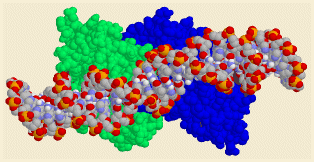
by Haley Adcox '11 and Cami Odio '11 This JMOL tutorial examines the structure and function of a ligand-activated transcriptional activator: the hypothetical ancestor to two modern steroid receptors. |
|
The
molecular and genomic basis of life is at the heart of
modern biology. In BIOL 263, we will learn techniques and
explore research questions at the forefront of molecular
biology, focusing on the mechanisms by which the information
of the genome is expressed to form the functional molecules
of living cells and organisms. The processes of DNA
replication, recombination and repair, transcription of RNA
from DNA templates, and translation of RNA into protein are
discussed in the context of current research, frequently
using primary literature. The function of genes and
regulation and measurement of gene expression are treated in
depth. Students analyze and publish interactive tutorials on
the structure and function of key macromolecules. This
intermediate-level course presumes a strong background in
the basics of protein structure/function, central dogma
processes, fundamental molecular techniques for manipulating
nucleic acids and proteins, and general chemistry. Required
prerequisites: BIOL 115, 116; one year of chemistry (CHEM
121-124 or CHEM 122); or permission of the instructor
(organic Chemistry is NOT required). Learning
Goals:
|