Predator/prey relationships
One of the driving forces in behavioral ecology is the relationship between predators and prey. The result of interactions between predators and their prey is a suite of behaviors involved in predator avoidance, prey capture, and their numerous interactions with biotic and abiotic factors. The behaviors associated with predation and its avoidance influence a broad range of ecological fields of study from population dynamics to community structure. Currently, the anti-predator behavior of prey is a common focus in the study of behavioral ecology. Such research has established the foundation for advances in ecology such as predator/prey theory, sociality, and the study of foraging behavior, among others. However, our knowledge of predators is limited. Even very basic information such as diet, hunting behavior, survival, and spatial use is unknown in many predators (e.g., raptors). As a result, the ecology of a major player in the predator/prey game is generally not addressed. This lack of information on predators is a key limitation to our understanding of predator/prey interactions. Without a basic background of predator behavior, we cannot begin to understand the complex dynamics between predators and their prey in an ecological context. Thus, the long-term goal of this research is to understand how predators contribute to the predator/prey dynamic.
Predators and the SBIW Paradigm
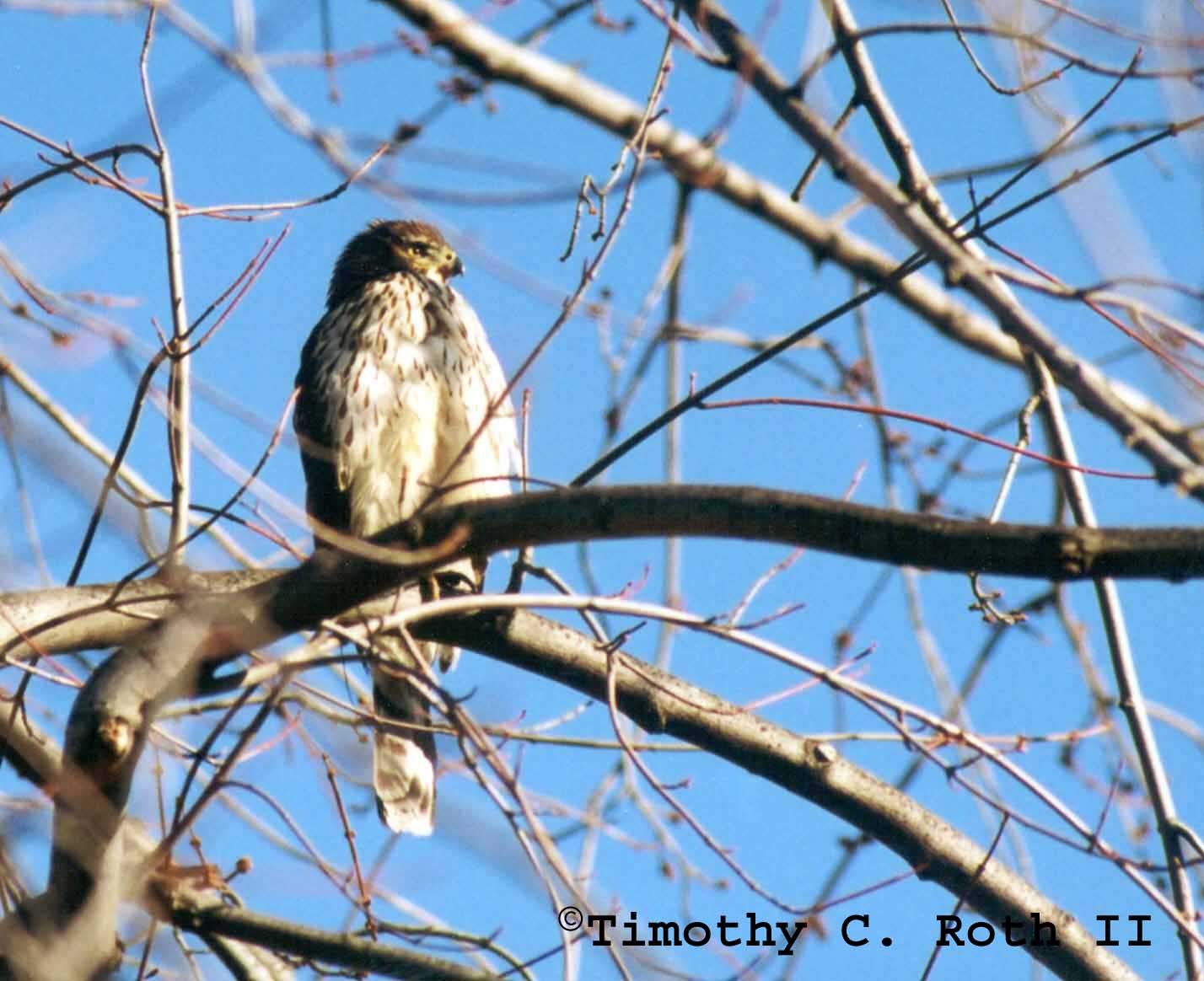
My dissertation work at Indiana State University under the supervision of Steven L. Lima dealt specifically with the predatory behavior of Accipiter hawks (Cooper’s and sharp-shinned hawks) and provided the opportunity to combine my main interests into one project. The primary goals of my research were 1) to establish a conceptual understanding of the small bird predator through the description of Accipiter natural history and 2) to examine the large-scale issues of predictability and movement of predatory hawks. This latter goal tied nicely into my interests in spatial ecology. Using radio telemetry, GIS modeling, and the assistance of numerous field technicians, I collected a great deal of valuable and unique information about the behavioral ecology of these hawks. Some of the more interesting findings of my research are that Accipiters seem to manage their prey’s perception of risk on a daily scale by moving across their home range in an unpredictable manner, without focusing on prey “hotspots” such as bird feeders (Roth and Lima 2007 Am Nat). This unexpected result may be a consequence of hunting behaviorally responsive prey and may be unique to predators that can quickly traverse large portions of their home ranges. Accipiter hawks may also be involved in a “behavioral cascade” where they avoid activity early in the morning and late in the afternoon when their predators (owls) are active (Roth and Lima 2007 Oecologia) . As a result, small birds may be somewhat released from predation during these crepuscular periods. This temporal trophic interaction may be an alternative to diel changes in air temperature or nocturnal fasting as an explanation for the bimodal pattern in the daily activity typical of small birds. In addition, I verified the key, but previously unsupported from studies of predator behavior, assumptions that small birds in groups are safer than solitary individuals and those preoccupied with foraging are more easily captured by predators, as well as documented for the first time the diet, survival, and space use of Cooper’s and sharp-shinned hawks during the winter.
Cooper's Hawk
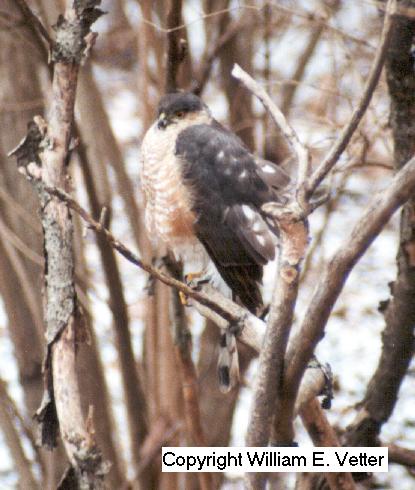
Sharp-shinned Hawk
Other Work
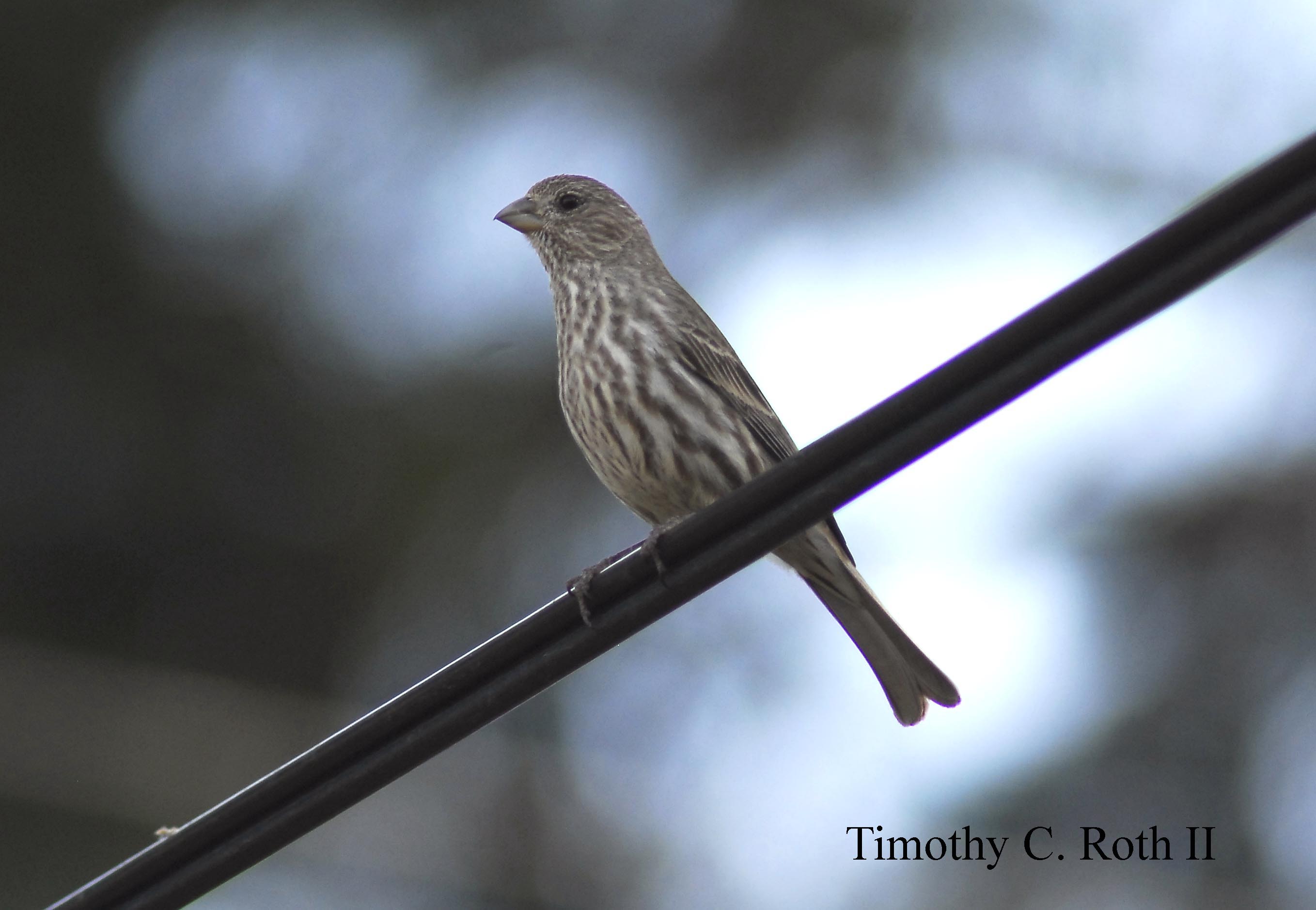
From a more prey-based perspective, I have focused on group decision making in flocks under the risk of predation and the relevance of olfactory cues for anti-predator behavior (Roth et al. 2008 Anim Behav and Roth et al. 2008 Ethology). Both of these projects were lab-based works using the house finch as a model species.