Students
and Alumni
from the
Bacterial pH
Lab
Research
Publications
Research Group 2024

Dr. S., Andrew Pilat '25, Slaybrina Raphael '26, Haedi Bao Dinh '25, Andrew Van Horn '25, Dominick Frost '26
Research Group 2023

Haedi Bao Dinh '25, Andrew Van Horn '25, Zach Slimak, Andrew Pilat '25, Yangyang Liu '24,
Slaybrina Raphael '26, Ayman Wadud '25, Bailey Fitzgerald '24, Logan Gusmano '25, Maya Vaccaro '24
Summer 2022
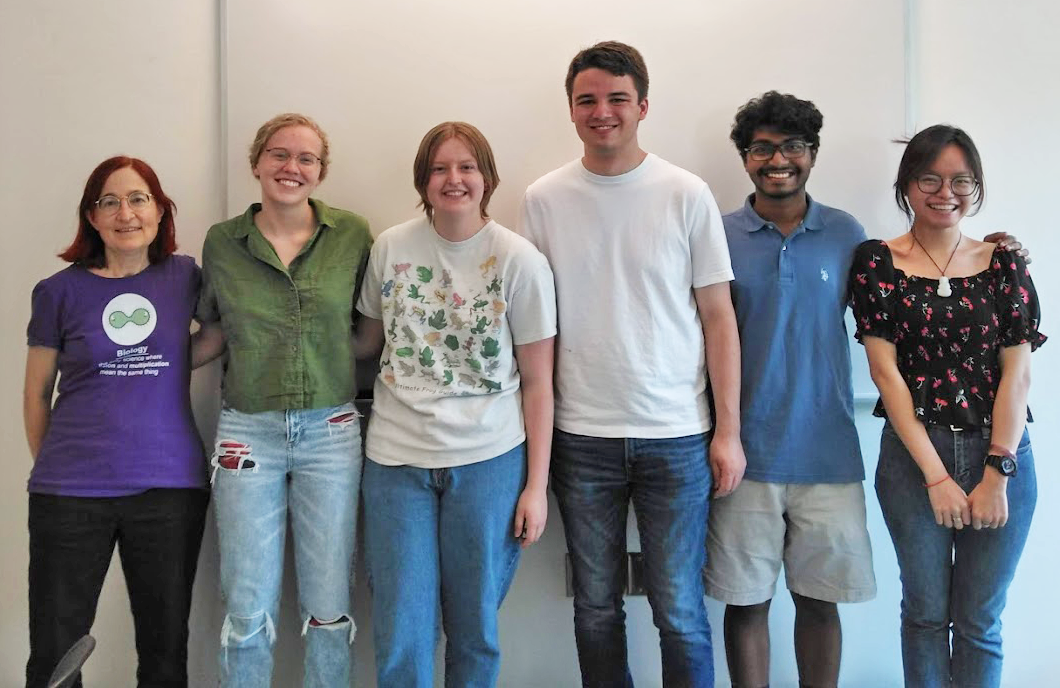
Dr.
S., Julieanna
King, Miah
Rodriguez-Hedeen,
Andrew Van
Horn '25,
Ayman Wadud
'25, Haedi Bao
Dinh '25
Fall 2021
Summer 2021
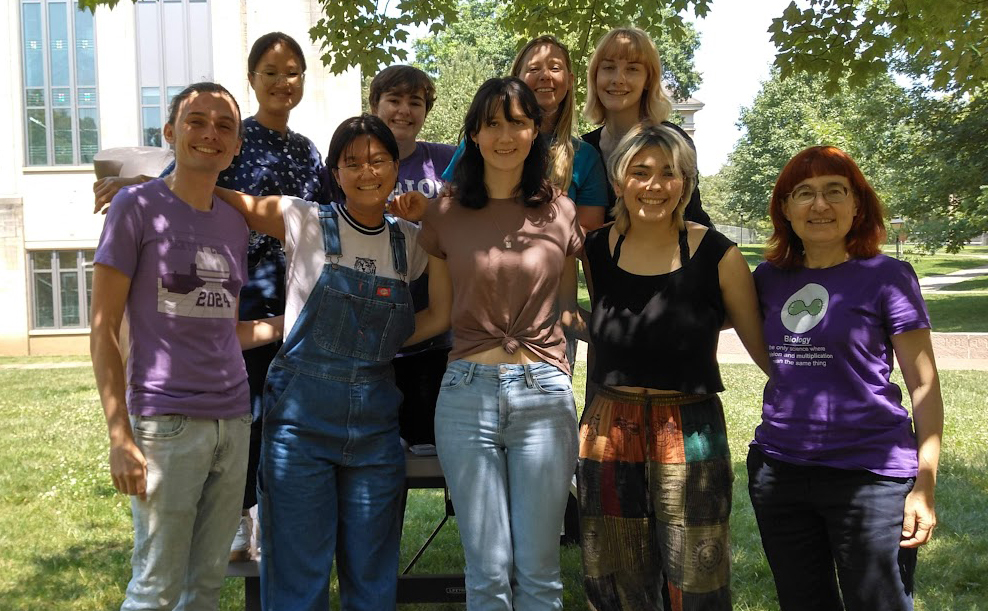
Zach Baker '24, Minh Pham '23,
Rachel Chen '24, Makenna Hughes, Eva
Illuzzi '24,
Chelsea Menke, Bailey Fitzgerald
'24, Maya Vaccaro '24, Dr. S.
Winter and
Spring 2021
Top:
Meheret
Ourgessa '23,
Ubongabasi
Asuquo '23,
Beimnet
Kassaye '23
Below: Yana
Honcharuk '23,
Chevaugn
Campbell '24
August
2020
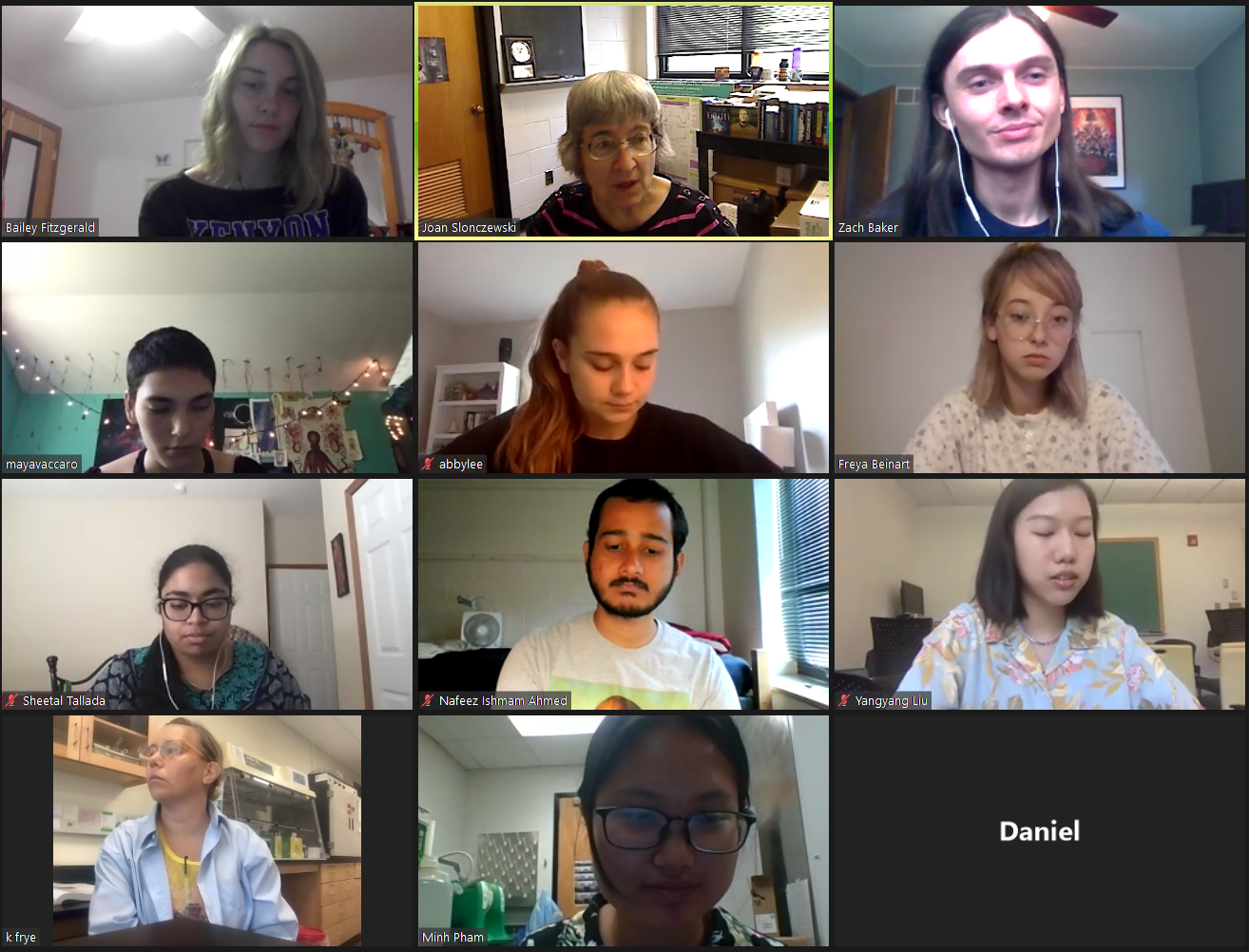
Bailey
Fitzgerald
'24, Dr. S.,
Zach Baker
'24, Maya
Vaccaro '24,
Abby Lee '22,
Freya Beinart
'24,
Sheetal
Tallada '23,
Nafeez Ishmam
Ahmed '23,
Yangyang Liu
'23, Kim Frye,
Minh Pham '23,
Daniel Barich
'05.
Also in
Bacteria
Lab:
Lizzy Apunda
'22, Eva
Illuzzi '24,
Sam Schaffner
'21, Happy
Kassaye '23,
Rachel Chen
'24,
April Murphy
'22, Meera
Chambers '24.
Bacteria
Lab 2019-2020
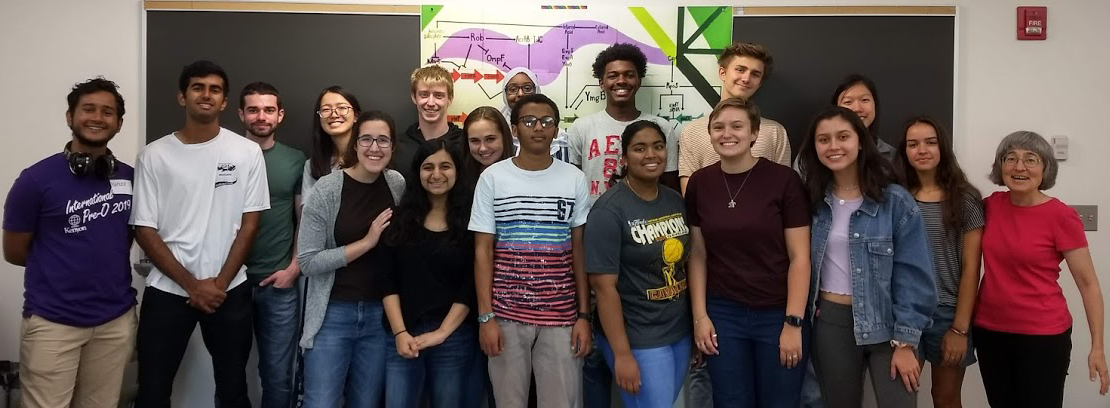
Nafeez
Ishmam Ahmed
'23, Thomas
Kallarakal
'23, Landon
Porter, Haofan
Li '20, Sam
Schaffner,
Rodaba Rahim
'22,
Mark Lang '22,
Abby Lee '22,
Happy Kassaye
'23, Sumaya
Ahmed '22,
Zion Snardon
'22, Sheetal
Tallada '23,
Cassandra Lis
'23,
Yangyang Liu
'23, Alex
Smirnov '23,
Gabriela Cruz
Echeverria
'23, Alex
Thoms '23, Dr.
S. Also:
Lizzy Apunda
'22
Summer
2019
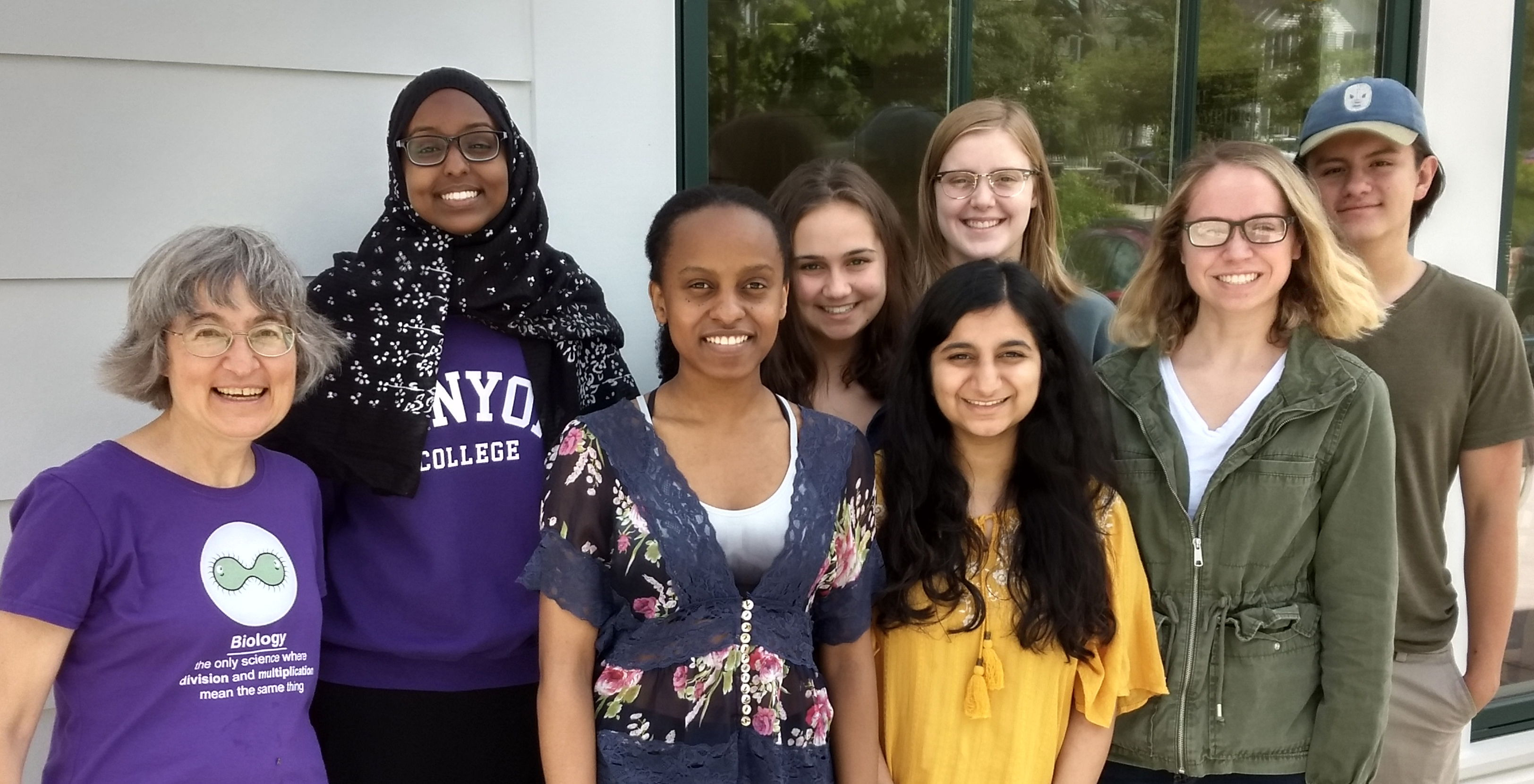
Dr.
S., Sumaya
Ahmed '22,
Lizzie Apunda
'22, Abby Lee
'22, Rodaba
Rahim '22,
Jordan
Schisler,
Katie Bischof,
Daniel Pastor
Bacteria
Lab 2018-2019
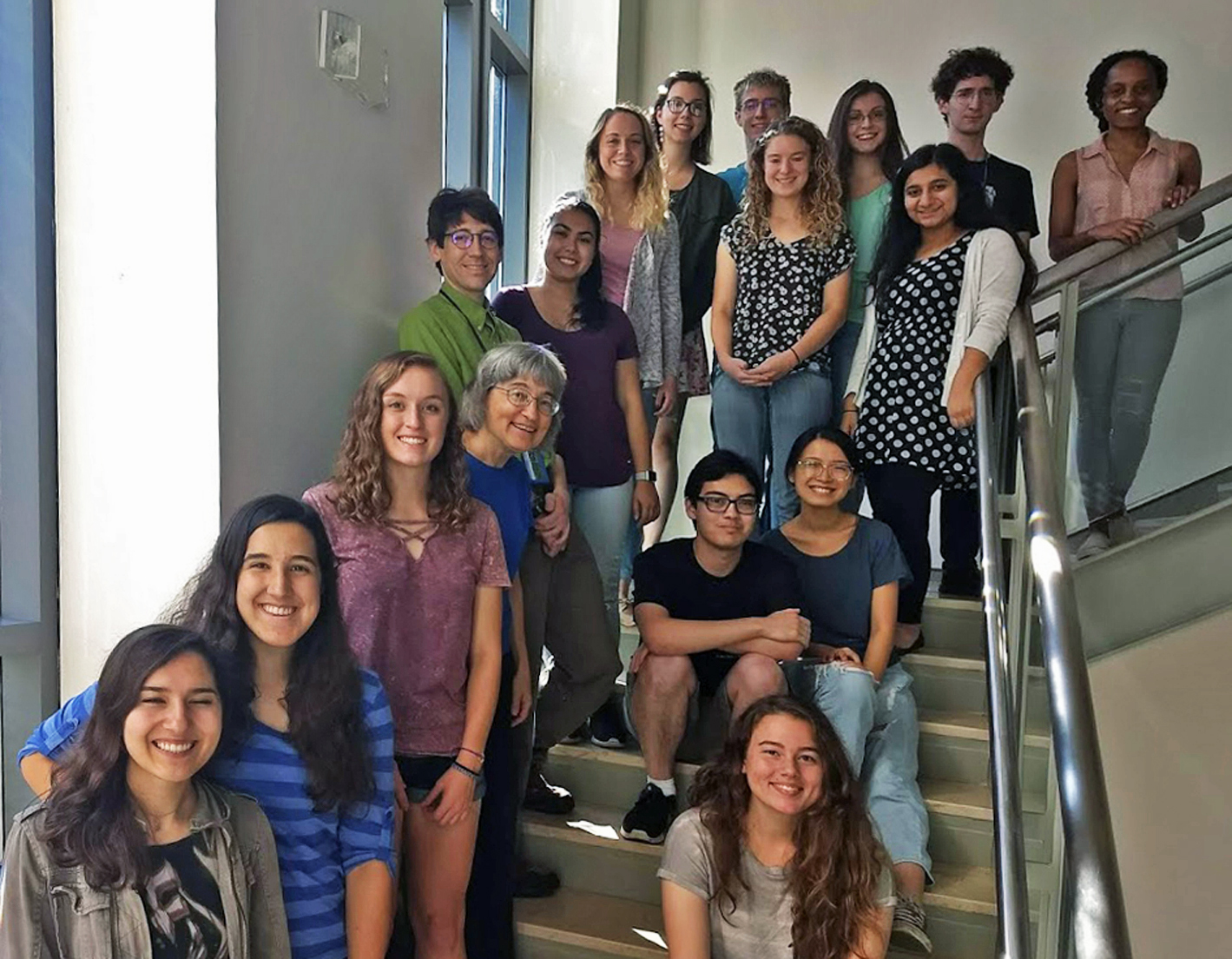
Jessie
Griffith '19,
Mark Lang '22,
Karina Kunka
'19, Jonah
Dominguez '22,
Lizzie Apunda
'22,
Zack Blount,
Roya Best '22,
Katie
Bischof, Miriam
Hyman '21, Rodaba
Rahim '22,
Julia
Borys '21, Sam
Schaffner '21,
Morgan Engmann
'20, Dr. S.,
Jeremy Moore
'19, Sasha
Smerekanych
'20, Haofan Li
'20.
Also: Sumaya
Ahmed '22,
Simon Lentz
'22
Summer
Lab 2018

Dr. S., Chase
Holdener, Katie
Bischof, Sam
Schaffner '21,
Julia Borys
'21, Miriam
Hyman '21,
Ellie Broeren,
Elizabeth
Gifford,
Nikolas Otto.
Bacteria
Lab 2017-2018
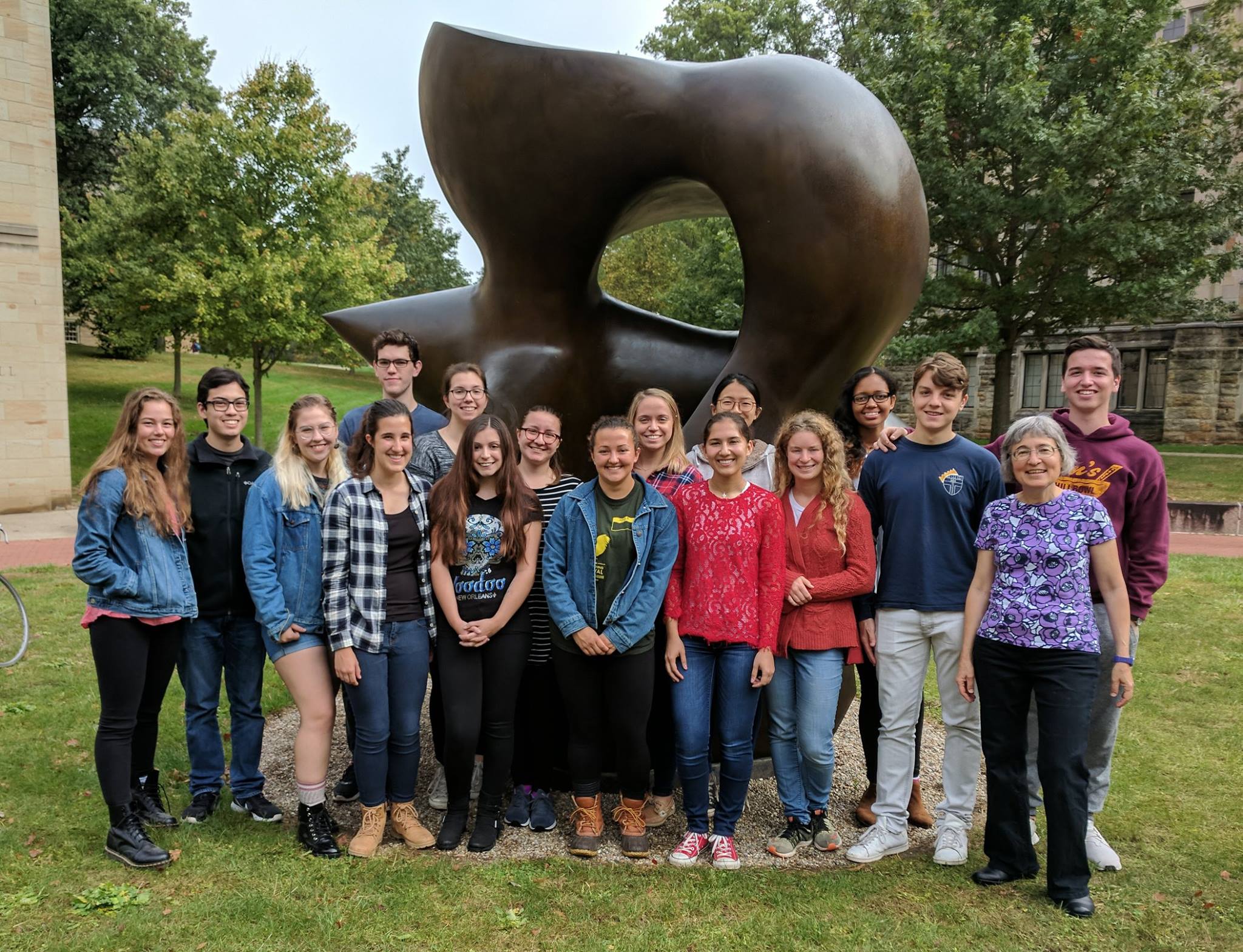
Sasha
Smerekanych
'20, Jeremy
Moore '19,
Trudy Wrona
'20, Sam
Schaffner '21,
Erick Ditmars
'18, Jessie
Griffith '19,
Karina Kunka
'19,
Anna Tancredi
'20, Meg Dye
'21, Katie
Bischof, Julia
Borys '21,
Haofan Li '20,
Miriam Hyman
'21, Afomia
Ayele '21,
Ward Castelli
'21, Nate
Saindon '21,
Dr. S. Also:
Morgan Engmann
'20, Grant
Hall '20.
Summer
Lab 2017
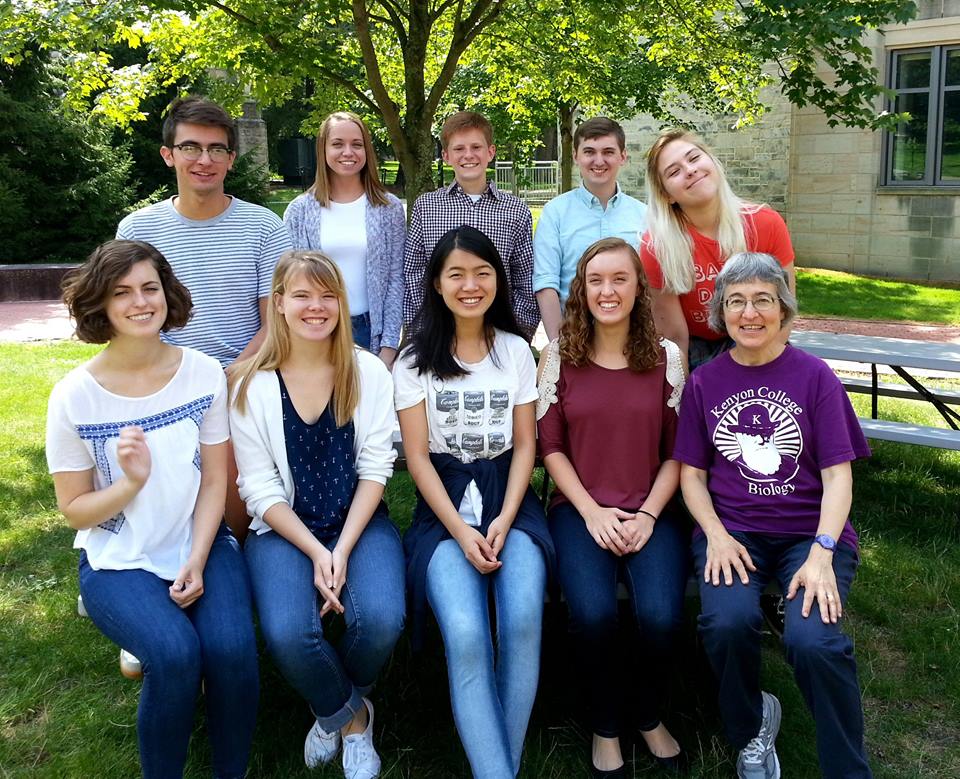
Carter
Brzezinski
'20, Katie
Bischof, Chase
Holdener,
Preston
Basting, Trudy
Wrona '20,
Ellie Broeren,
Mary Harris,
Haofan Li '20,
Morgan Engmann
'20, Dr. S.
Bacteria
Lab 2016-2017
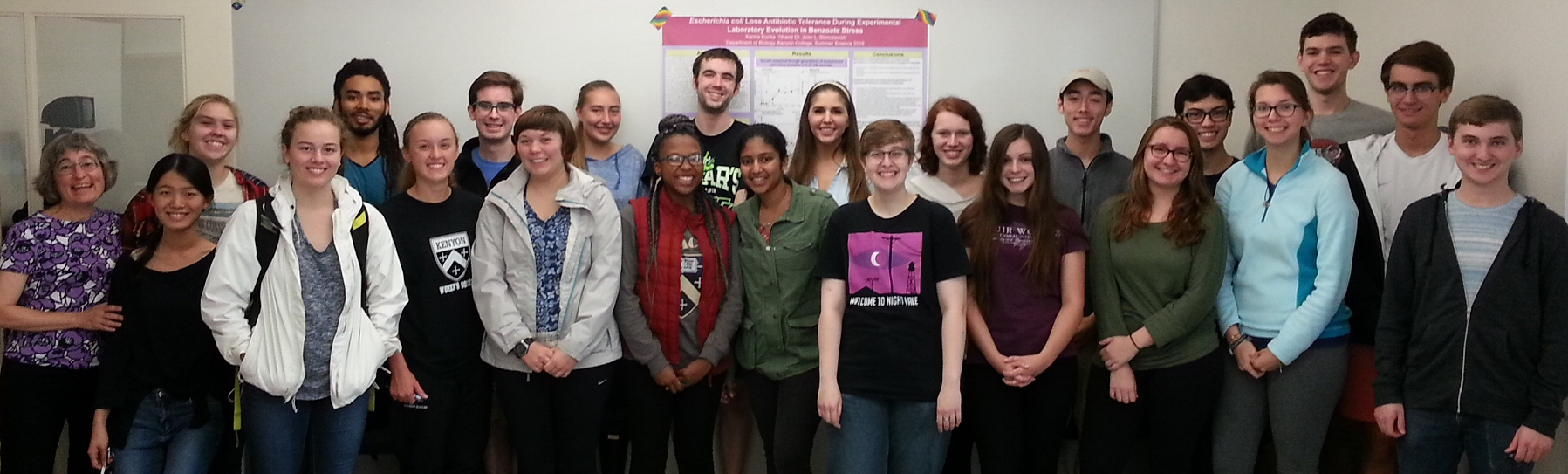
Dr.
S., Haofan Li
'20, Trudy
Wrona '20,
Sasha
Smerekanych
'20, Adama
Berndt '17,
Morgan Engmann
'20,
Sean Bush '17,
Nadia Torok
'19, Alex
Schaal '17,
Nonto Mdluli
'18, Richard
Dennis '17,
Sriya
Chadalavada
'19,
Liz Eder '17,
Rudy Casseday
'20, Jo
Stanley '20,
Katrina Kunka
'19, Grant
Hall '20, Anna
Tancredi '19,
Jeremy Moore
'19, Jessie
Griffith '19,
Erick Ditmars
'18, Carter
Brzezinski
'20, Preston
Basting
Summer
Lab 2016
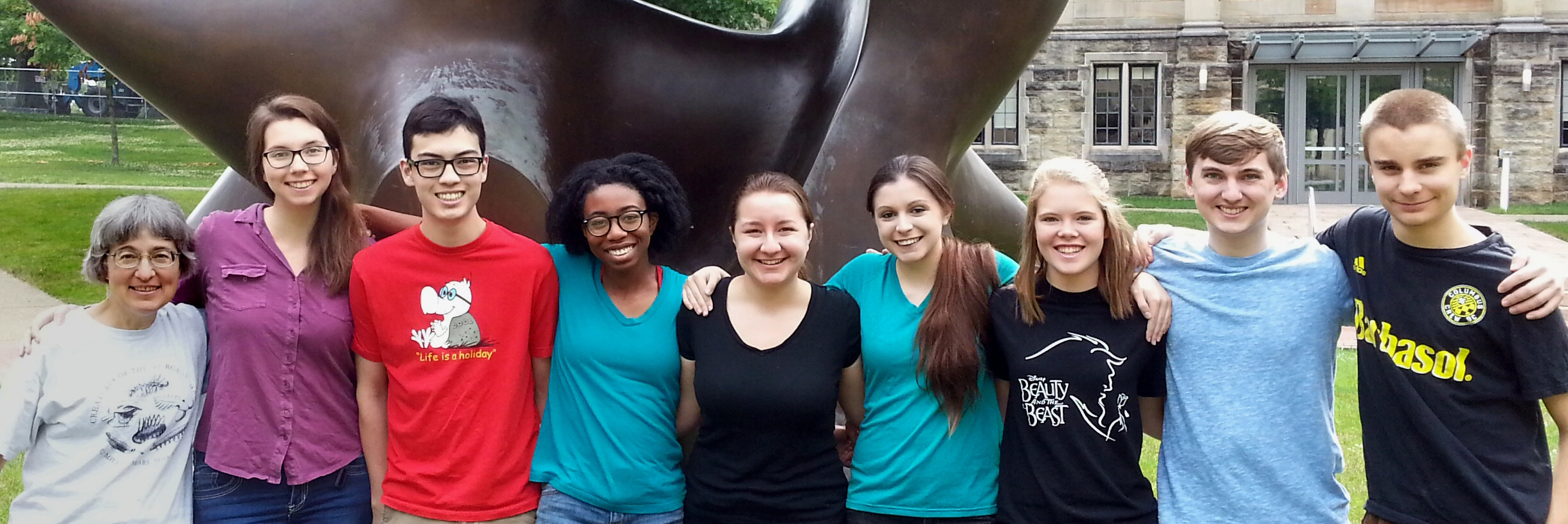
Dr.
S., Jessie
Griffith '19,
Jeremy Moore
'19, Donnisa
Edmonds, Anna
Tancredi '19,
Karina Kunka
'19,
Mary Harris,
Preston
Basting, Greg
Gillen
|
Bacteria
Lab 2015-2016
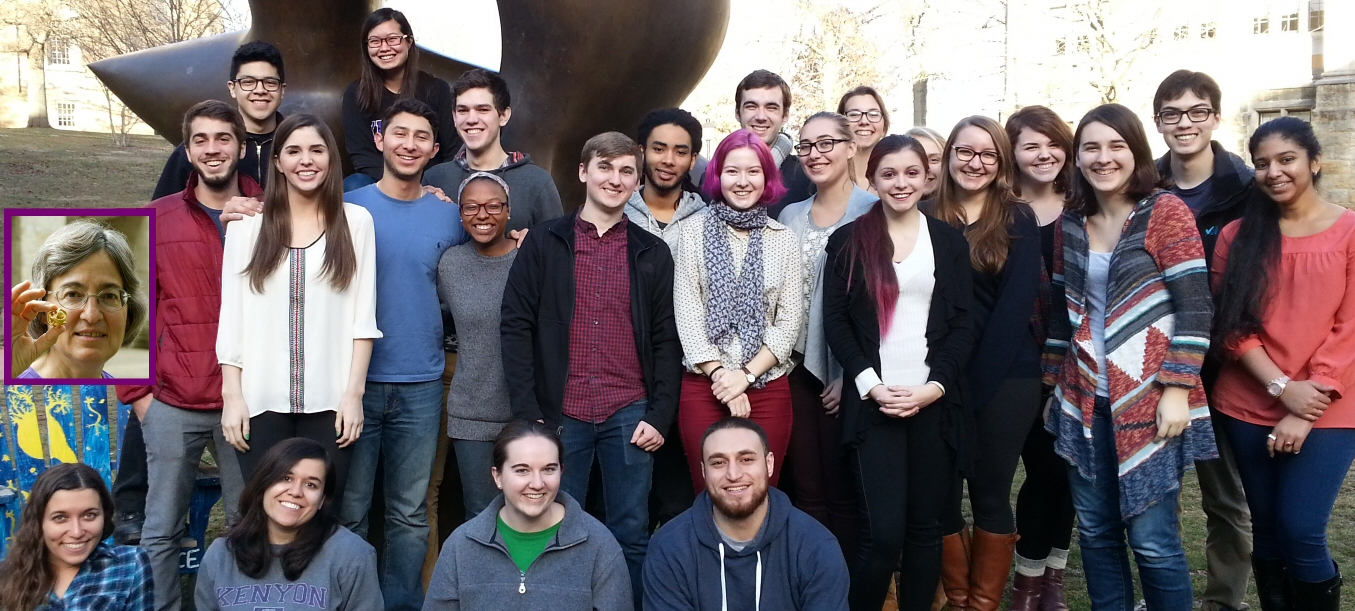
Above:
Sebastian Chavez Erazo
'18, Amanda He '16
Standing: Dom
Camperchioli '17, Liz
Eder '17, Santi Acero,
Erick Ditmars '18, Nonto
Mdluli '18, Preston
Basting,
Adama Berndt '17, Claire
Bradham '18, Richard
Dennis '17, Alex Schaal
'17, Jessie Griffith
'19, Karina Kunka '19,
Kristen Pitts '19, Anna
Tancredi '19,
Rebecca Allen '19, Liz
Hoover '19, Jeremy Moore
'19, Sriya Chadalavada
'19
Seated: Stephanie Penix
'16, Alex Gonzales '16,
Kaitlin Creamer '16,
Issam Hamdallah '16
Inset: Dr.
S. Also in
2016: Sean Bush '19,
Jesseca Kusher, '19,
Nadia Torok '19
Summer
Lab 2015
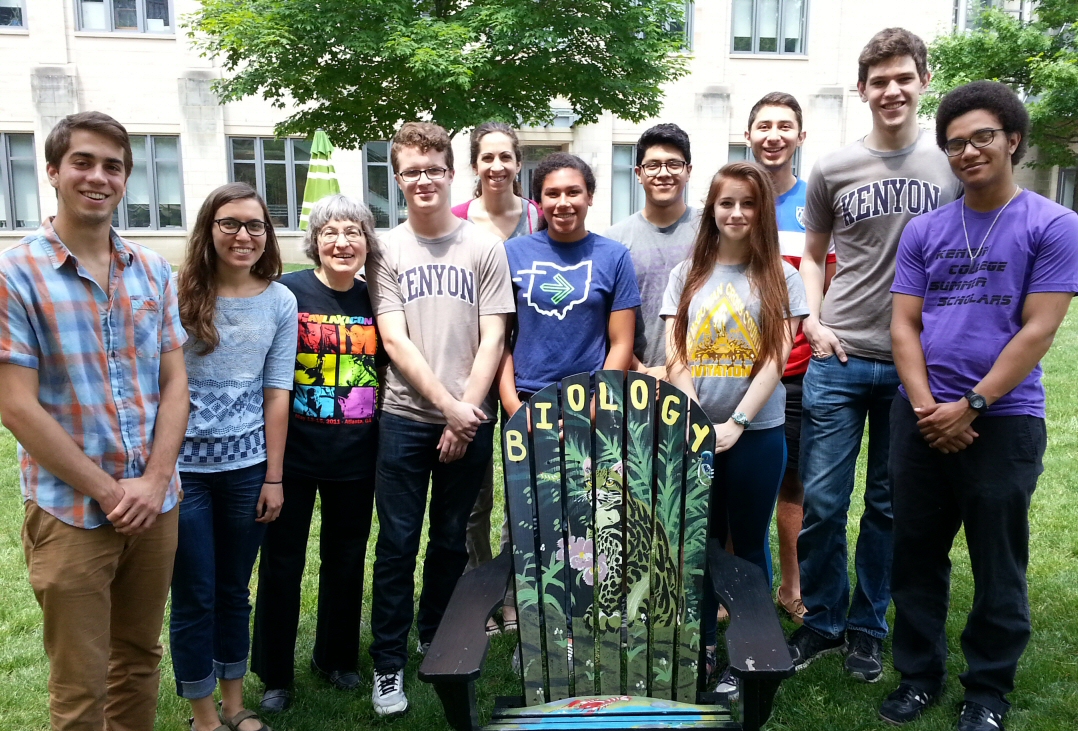
Dominic
Camperchioli '17, Stephanie
Penix '16, Joan
"Dr. S." Slonczewski,
Will Henderson MVHS,
Michelle Clark,
Taryn Kohlmann MVHS, Sebastian
Chavez Erazo '18, Heather
Kerkhoff MVHS, Santiago
Acero, Erick Ditmars '18,
Zack
Scott '18.
Chair painted by:
Kari Deininger,
'13
Bacteria
Lab Group 2014-2015
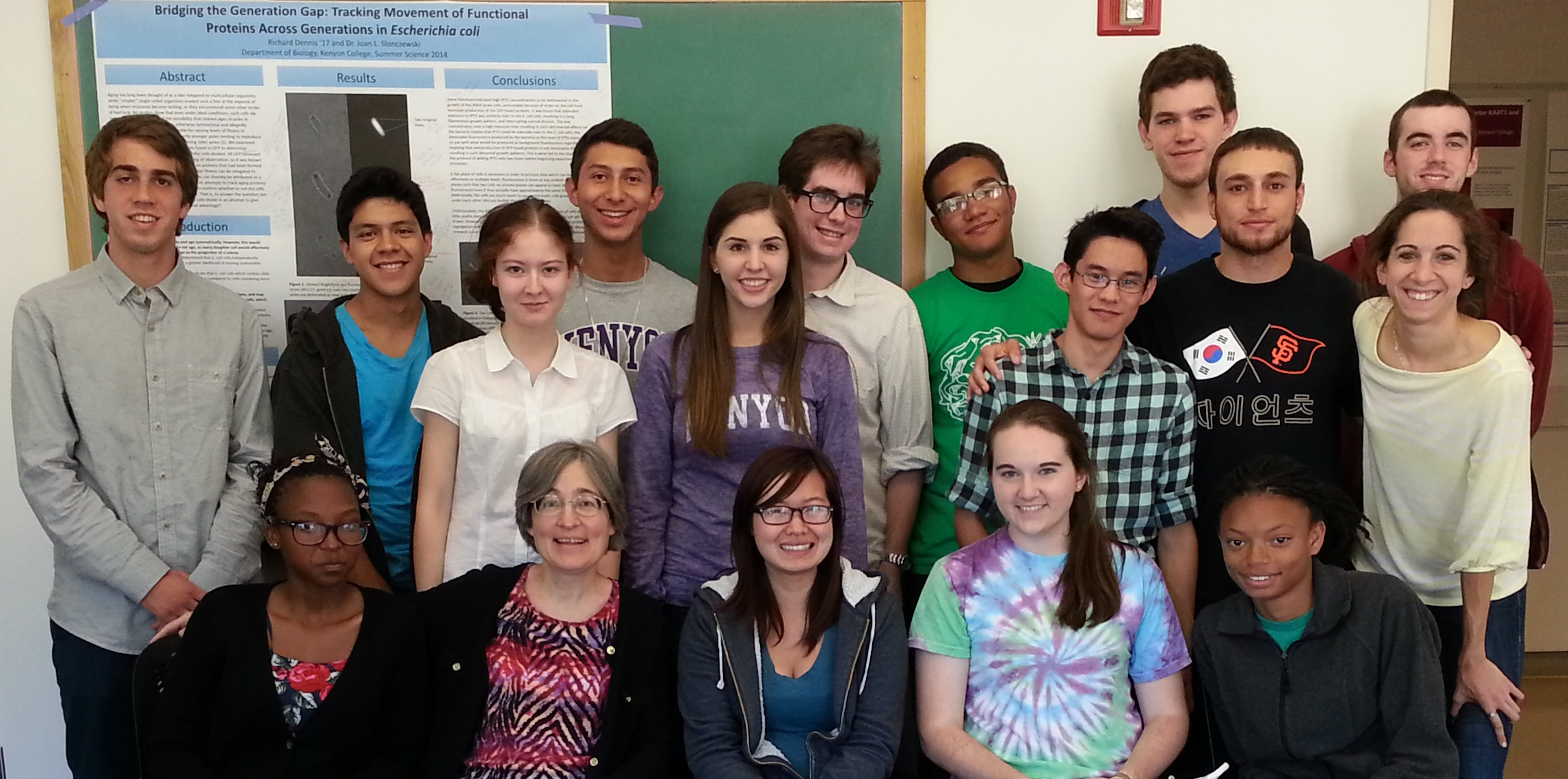
Dominic
Camperchioli
'17, Jorge
Chavez Erazo '18, Claire
Bradham '19, Santiago
Acero, Elizabeth
Eder '17, Sean
Bush '17, Zack
Scott '18, Anthony Tellez
'17, Erick Ditmars '18,
Issam Hamdallah '16,
Richard Dennis
'17, Michelle
Clark
Front
row: Nontokozo Mdluli
'18, Joan "Dr. S."
Slonczewski, Amanda He
'16, Kaitlin
Creamer '16,
Toneisha Stubbs
'18
Bacteria
Lab Group 2013-2014
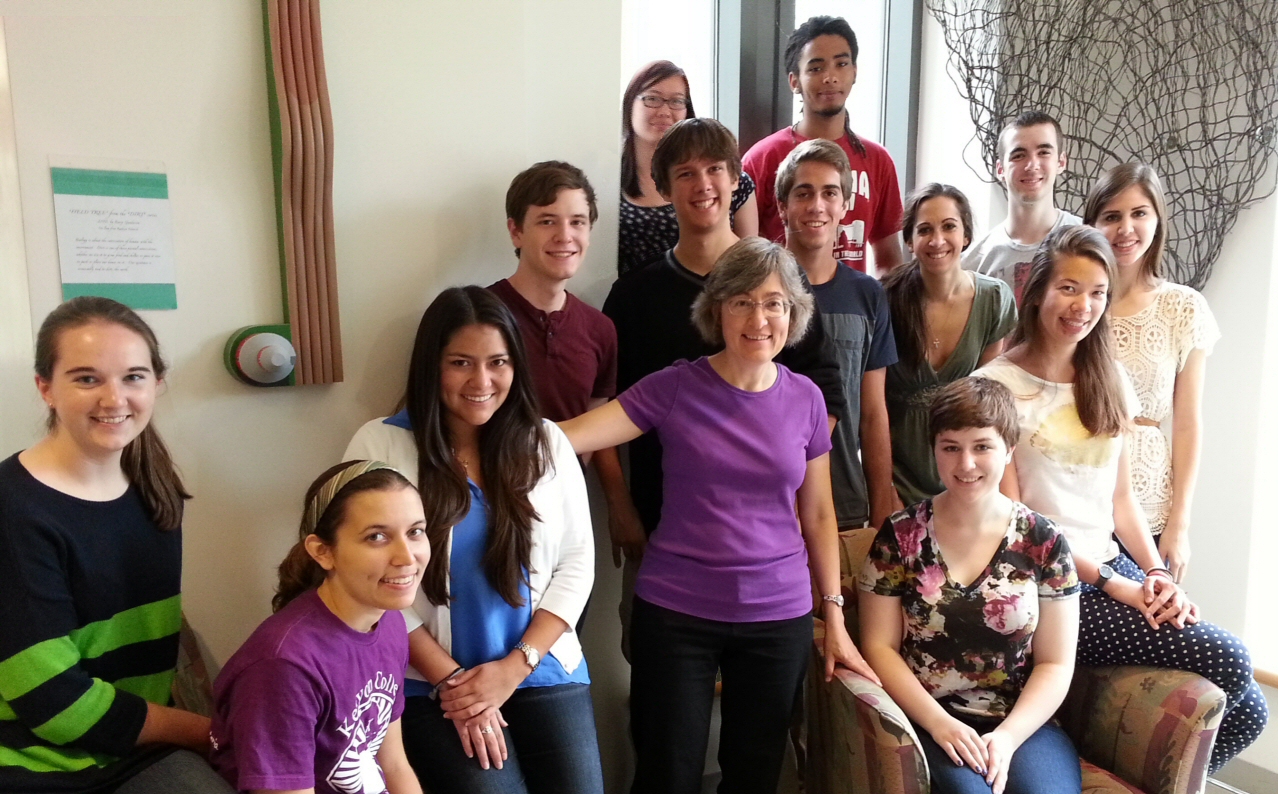
|
Windows: Amanda He
'16, Adama Berndt '17, Richard Dennis
'17, Elizabeth Eder '17
Middle row: M. Michael Harden
'14, Luke Kresslein '15, Dominic
Camperchioli '17, Michelle Clark, Anna
Yie, '14
Front
row: Kaitlin Creamer '16,
Stephanie Penix '16, Maria Narvaez
'14, Joan "Dr. S." Slonczewski,
Eleanor Lopatto '17.
|
Bacteria Lab
Group 2012-2013
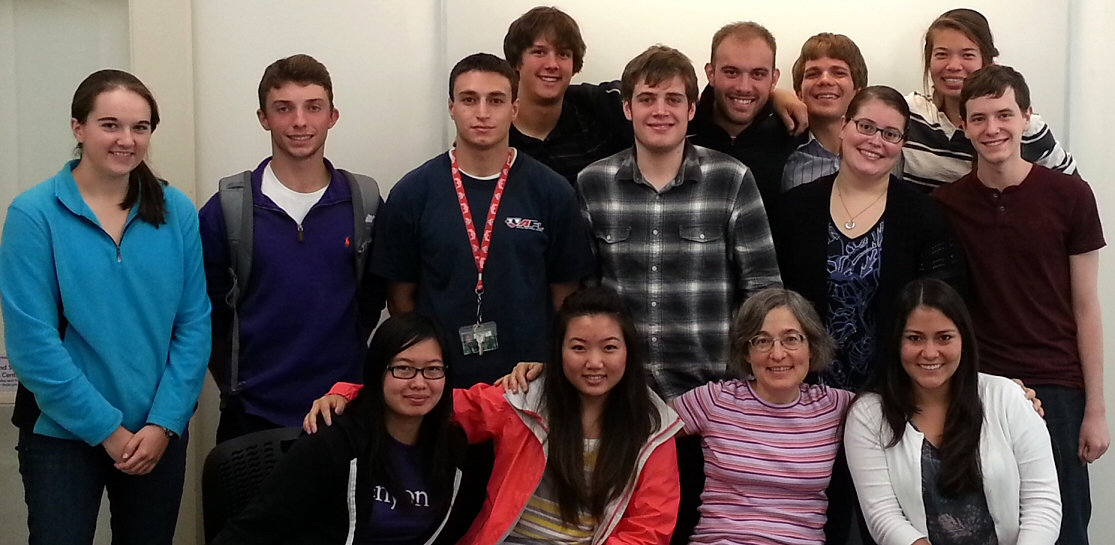
|
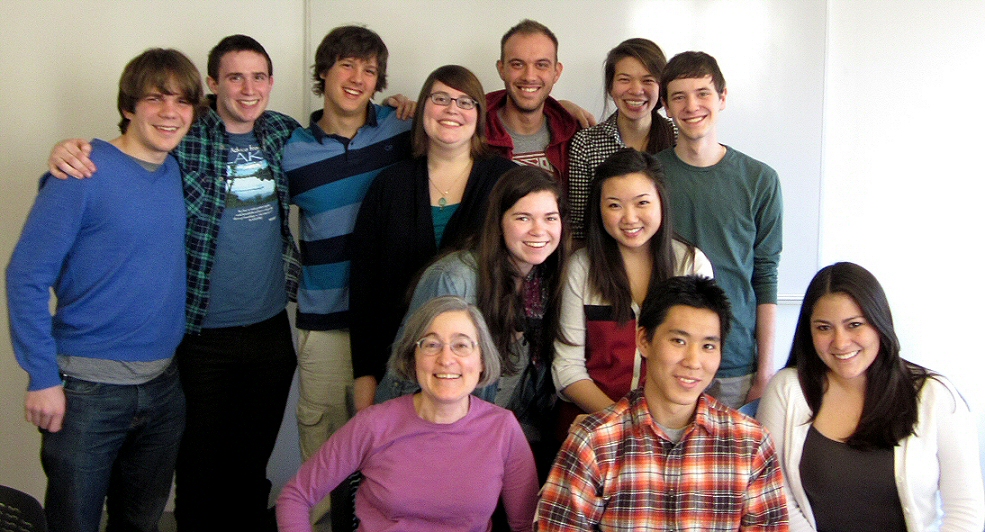
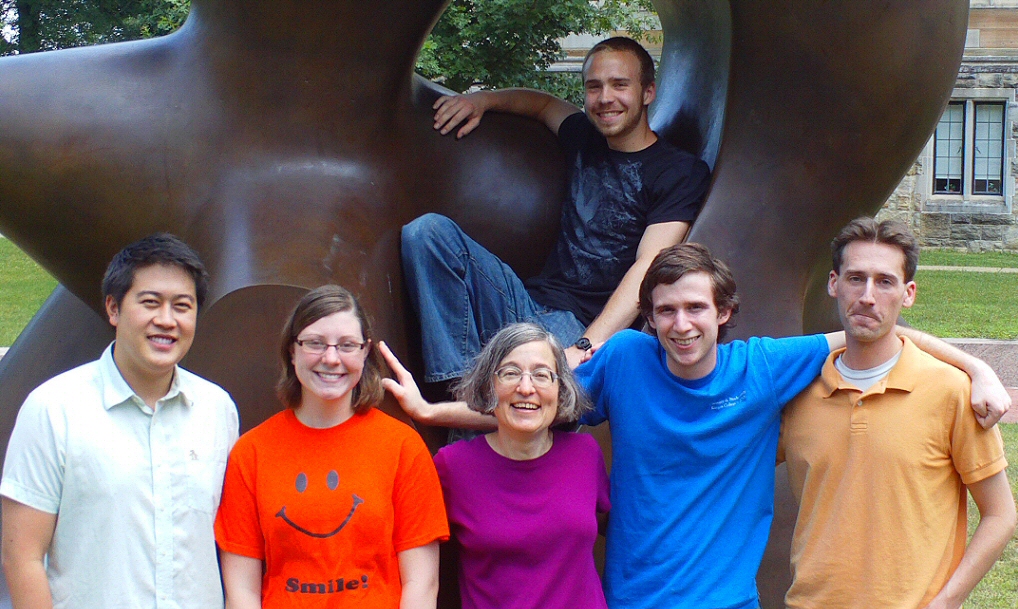 Gian
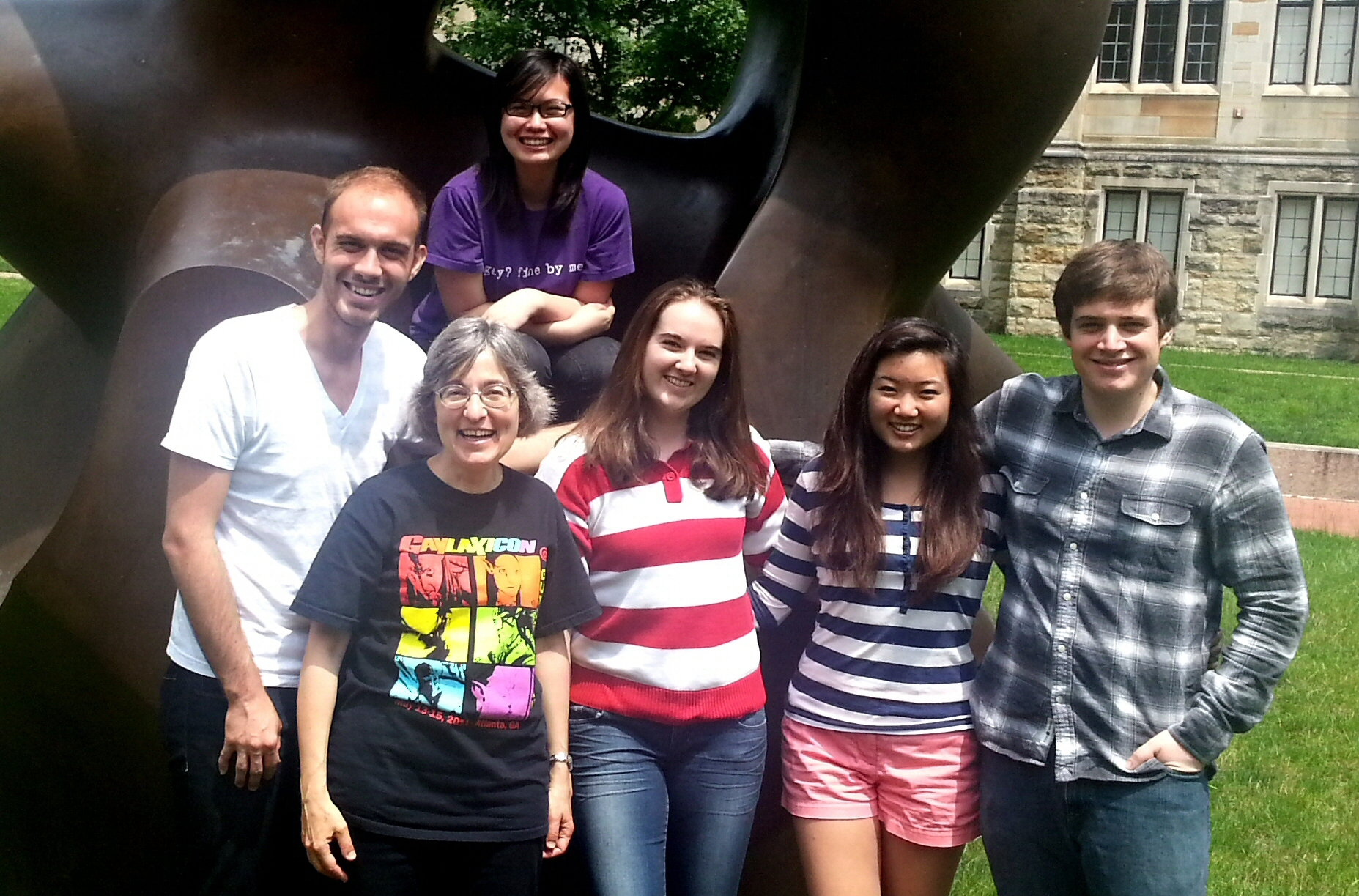
Garduque '12, Meredith Dunn, Patrick Mershon '14 (above),
"Dr. S." Slonczewski, Dan Riggins '12, Ryan Kitko
Gian
Garduque '12, Meredith Dunn, Patrick Mershon '14 (above),
"Dr. S." Slonczewski, Dan Riggins '12, Ryan Kitko